Featured post

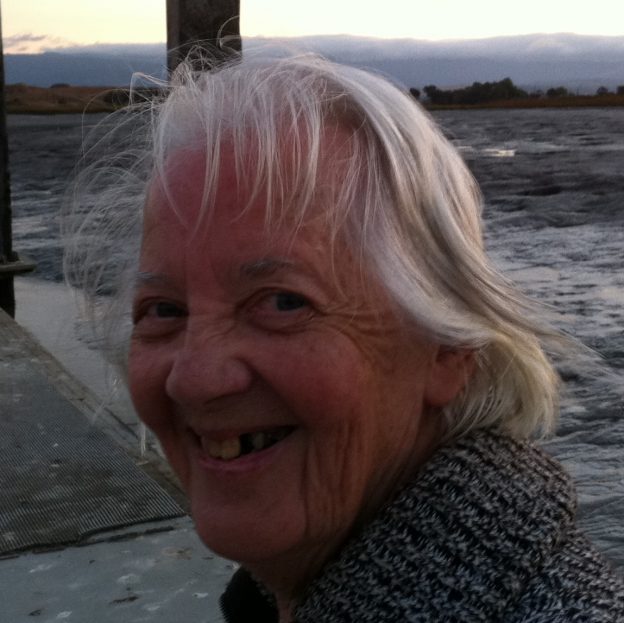
Dorothy Margaret (Figueroa) Conlon

Dec. 17, 1921 to Apr. 11, 2014

Dot was the fourth of eight children born to James V. and Barbara M. (Reinhard) Figueroa of Richmond Hill, New York. Growing up without a car, she became an avid walker and was proud of the strength and tenacity she felt she inherited with her German and Spanish ancestry. She was also the favorite of her father’s friend, ‘Uncle Bill’ Timmerman, and she treasured the dolls he gave her. As the middle child, she also looked after her younger brothers, taking them to the movies and the park, and after dinner she and her father would recite poetry from memory as they washed and dried the dishes. Dorothy graduated from Our Lady of Wisdom Academy in Ozone Park in 1940, where she was known for her good nature, kind disposition, and even temper.

For the next dozen years Dot commuted to Manhattan, working as a secretary five and a half days per week and taking in the shows and visiting museums after work on Saturdays. Adventurous and proud of her independent spirit, she used her earnings to travel whenever and wherever she could. She was a talented pianist, accomplished at needlework, very well read, and a prolific correspondent, especially during World War II, and loved to dance. Dot was fascinated by the sky, always spotting airplanes and contrails, fondly remembered gazing at stars in the summer evening, and even climbing a telephone pole as a young girl to see what was up there.

But Dot knew “she was home” when she met her Bill on a blind date, and had to sit on his lap in the crowded car. She married William Martin Conlon of Whitman, Mass. on May 31, 1952 at St. Mary Gate of Heaven Church in Ozone Park and settled at 9 Elizabeth Drive in Bethpage, NY, a home that they cherished, and with the basement she insisted on. Dot became the quintessential housewife and mother as she raised Billy (Jr.), Tommy, and Barbara, in a home that seemed like it was straight out of a TV show. She would cook and clean, bake cookies, pies and birthday cakes, prepare the Thanksgiving and Christmas meals for extended family, all without asking, expecting, or wanting help.

Dot enjoyed living in Seabrook Texas during Bill’s three-year assignment for the Lunar Excursion Module ground tests, but was happy to return to her home in Bethpage and send the kids off to college and married life. During retirement, Dot and Bill were content to enjoy each others company at home with their books and garden, would travel to see their kids and grandchildren, and were very generous with financial support for education, weddings and real estate. She was a wise, caring and compassionate friend to many, and the favorite of young children in the neighborhood. Dot and Bill celebrated 50 years of marriage with a marvelous party, which is still talked about, at the Carltun close to their wedding reception.

With Bill’s health failing, they came out to Palo Alto so Bill Jr. and his wife Judith Schwartz could look after them. After Bill Sr. passed away in 2009, Dot remained at Sunrise Assisted Living, where she was a popular resident, famous for her brisk “New York Walk” and frequent outings. She enjoyed walking in town and at the Baylands, shopping with Bill and Judith at the farmers’ market, listening to live music ranging from bluegrass to opera, and appreciating good food, wine, and company. Dot loved the welcome she received from her new California friends celebrating Halloween, Thanksgiving, Christmas, 4th of July, and all the major Jewish holidays. She leaves behind her three children, three grand children, four great grand children, and the many friends and relatives who followed her exploits “Out and About with Mom” on Facebook.

A memorial service will be held 2:00 p.m. Thursday April 17 at Spangler Mortuaries, 399 S San Antonio Road, Los Altos, CA 94022. Dot will be interred with her husband at Calverton National Cemetery on Long Island.
The Piano

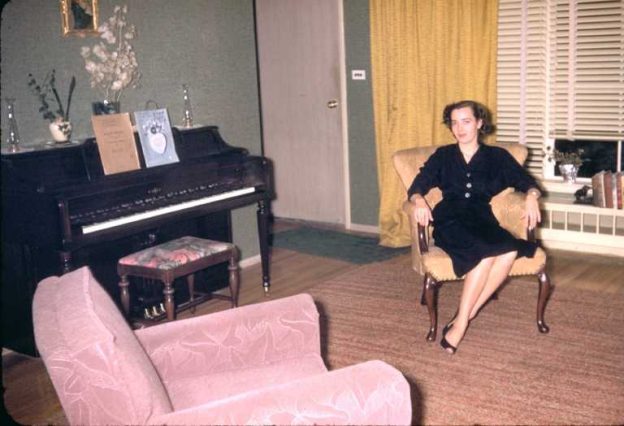
I was transcribing a letter today from Jimmy Horton in which he remembered on the first time he played music with Mom. She played piano quite well, and as I child I remember her practicing Rachmaninoff on the piano in our living room. In nice weather, the notes could be heard on the sidewalk through the screen door, and Mom would tell a story about a neighbor who appreciated the music as she practiced.

Alas, the talent was not shared with me, and I even lament that I was not forced or even encouraged to play. Probably just as well, as her ears might have suffered from the assault.

On a visit to her brother Jerry, he told me that the piano we had in Bethpage was actually the second piano. The one on which Mom learned had been sold one day by Grandpa, without consulting Grandma. She was so upset that she went right out an bought a replacement, which ultimately ended up in Bethpage.

Dualing Baedekers

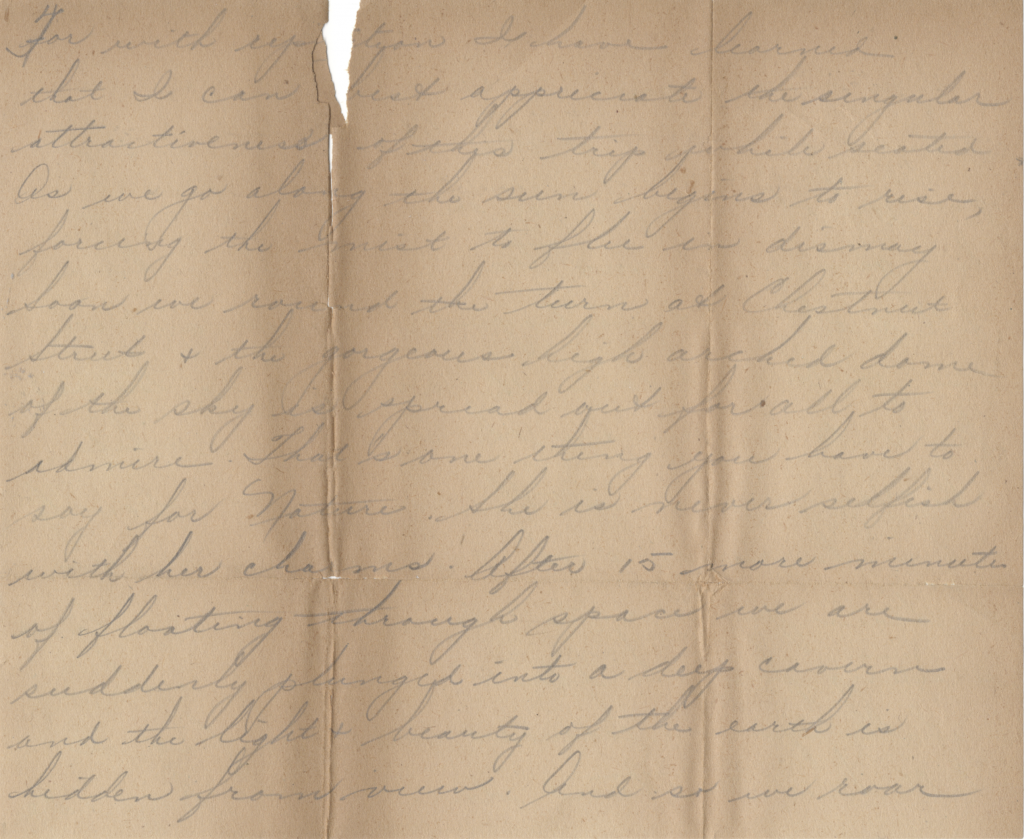
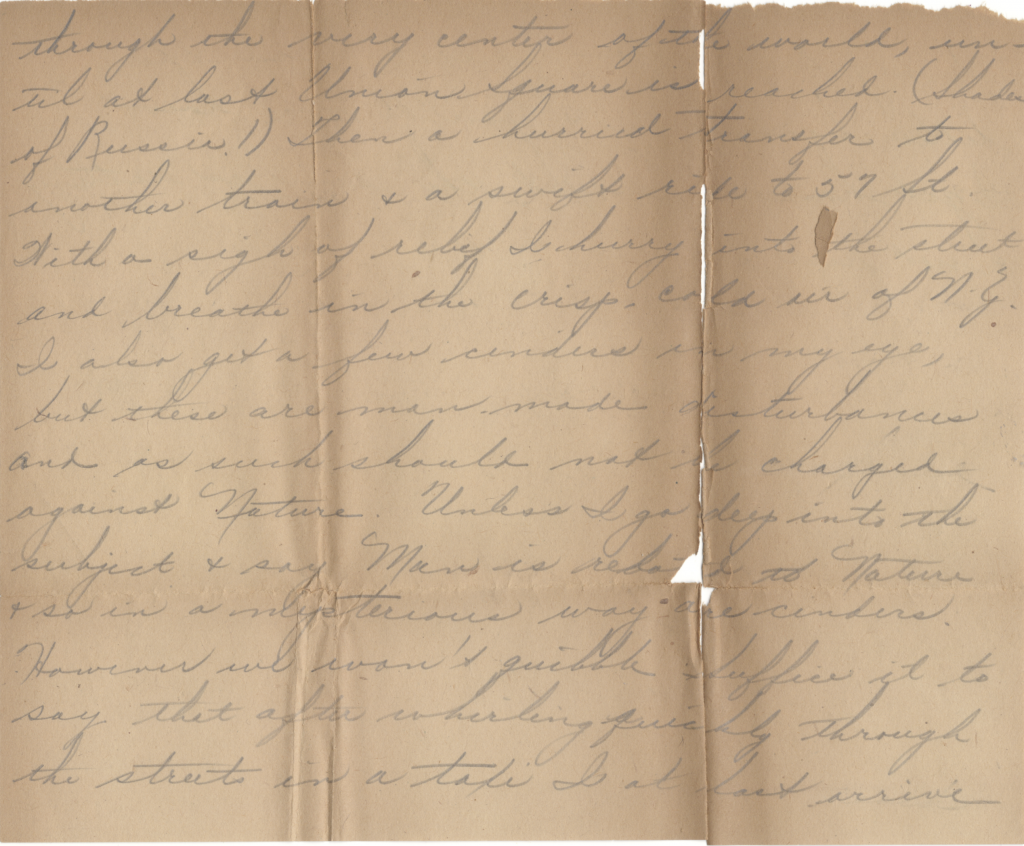
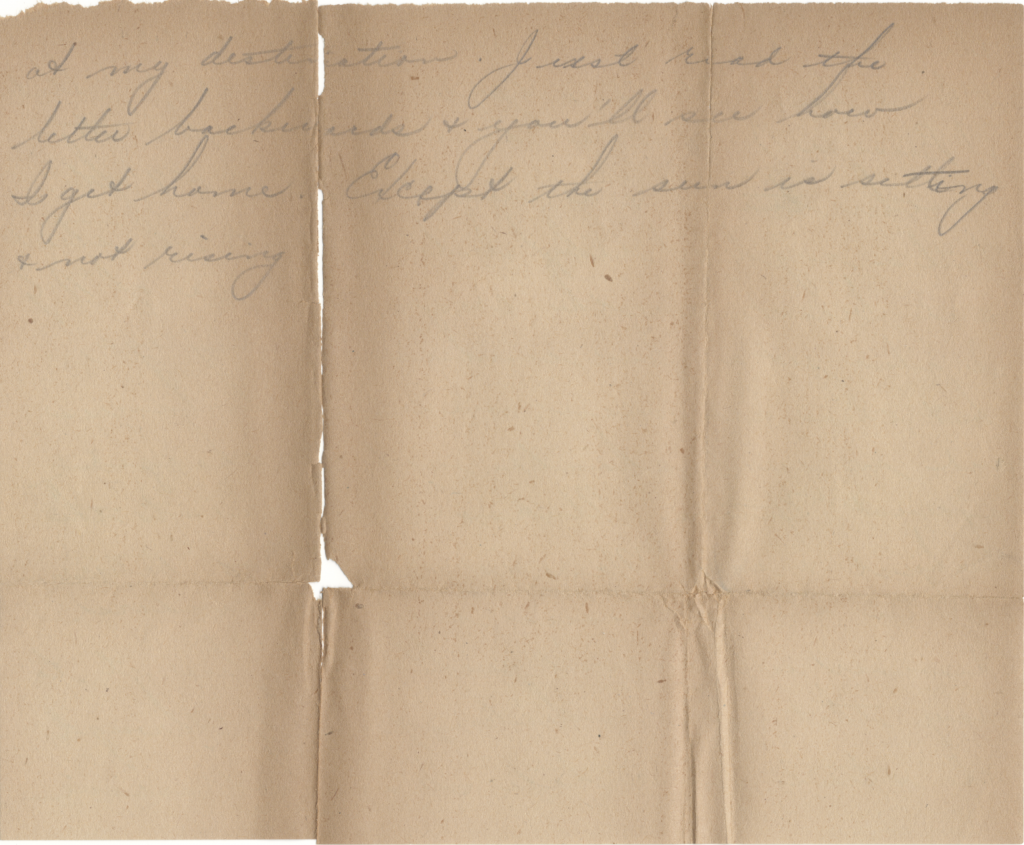
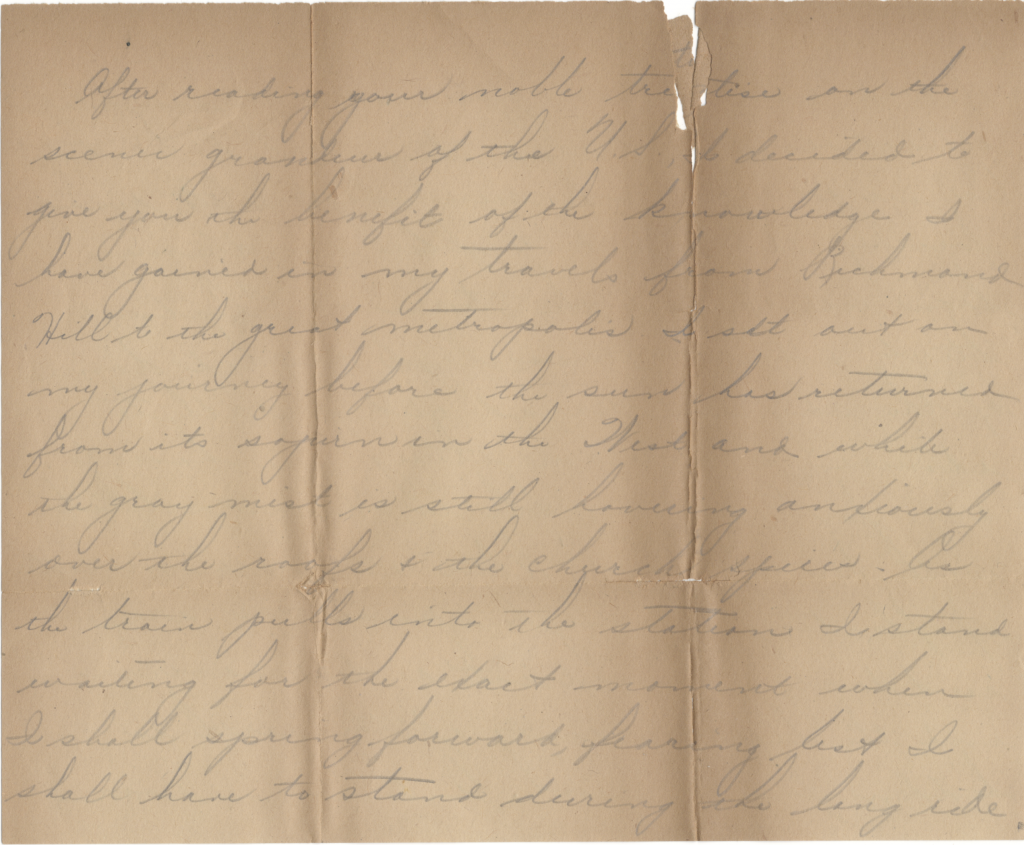
Dot was an avid correspondent with the neighborhood boys who had joined the service. Her letters do not survive, although occasionally she retained drafts of what she planned to write. Particularly memorable and amusing was what she composed in response to a letter she received from Jimmy W. Horton, who wrote on January 6, 1943 (password required) about his trip west to Hill Field in Ogden, Utah after completing training as an Engine Mechanic at the Rotunda Barracks adjacent to the Ford Motor Company factory in Dearborn, Michigan.

Dot saved this draft, written in pencil on construction paper, in the envelope of the letter. Year later, she copied it out in ink; I remember her pride at her clever and whimsical writing.

“After reading your noble treatise on the scenic grandeur of the U.S., I decided to give you the benefit of the knowledge I have gained in my travels from Richmond Hill to the great metropolis. I set out on my journey before the sun has returned from its sojourn in the West and while the gray mist is still hovering anxiously over the roofs & the church spires. As the the train pulls into the station I stand waiting for the exact moment when I shall spring forward, fearing lest I shall have to stand during the long ride. For with repetition I have learned that I can best appreciate the singular attractiveness of this trip while seated. As we go along the sun begins to rise, forcing the mist to flee in dismay. Soon we round the turn of Chestnut Street & the gorgeous high arched dome of the sky has spread out for all to admire. That’s one thing you have to say for Nature. She is never selfish with her charms. After 15 more minutes of floating through space we are suddenly plunged into a deep cavern and the light & beauty of the earth is hidden from our view. And so we roar through the very center of the world, until at last Union Square is reached. (Shades of Russia!) Then a hurried transfer to another train & a swift ride to 57 St. With a sigh of relief I hurry into the street and breathe in the crisp, cold air of N.Y. I also get a few cinders in my eye, but these are man-made disturbances and as such should not be charged against Nature. Unless I go deep into the subject & say Man is related to Nature & so in a mysterious way are cinders. However we won’t quibble. Suffice it to say that after whirling quickly through the streets in a taxi I at last arrive at my destination. Just read the letter backwards & you’ll see how I get home. Except the sun is setting & not rising.” — Dorothy M. Figueroa

I think it’s worth quoting a bit of Private Horton’s letter, which is interesting in its own right, and very much in the style of old travel guides. (To respect copyright, the letters are restricted by password.)

“Hill Field lies halfway between Ogden and Salt Lake City. One side, the West is bordered by the beautiful Great Salt Lake, while the other three sides are hemmed in by towering snow capped mountains. These mountains belong to the Sawtooth Range, I believe.

The field is approximately 4800 feet above sea level, while the mountains rise up another 4000 feet. The air is clear, warm during the day and cold at night while the scenery and setting is truly beautiful. Really “the heart of the Golden West.”

The train ride was long and in that sense boring, but actually was an extremely interesting trip.

We left Chicago on Sunday morning at 10 AM, after spending Saturday night on a Pullman. Chicago and North Western Railway carried us as far as Omaha. Where the Union Pacific took over.

Sunday afternoon I made my first crossing of the “mighty” Mississippi. It was a bleak and foreboding ice choked river. Then came the Corn Belt. Easy rolling country, looking bleak and deserted on a cold January day, stretched for miles.

Monday morning we awaked to find ourselves in what is the wheat country. The roll disappeared and I don’t believe there was a bump in the terrain. These were the prairies & old Buffalo country.

Then came the foothills. They rise suddenly, and the strangest feeling comes after passing the first hill. Around you, in front and to the sides are hills gradually graduating into mountains while looking back through the pass lies the Prairie. The only thing that stops the view is the horizon.

These foothills turned to the high rolling plateaus that formed the cow country. History certainly remembers the stories of this country. Cheyenne and Laramie were on the list of stops here. Two wide open towns, 40 years ago.

This itinerary is the famous Union Pacific Trail that carried many a wagon train years ago.

Then came the Rockies. Words cannot describe them. They must be seen to be appreciated. Towering snow capped mountains, hovering in the clouds.” — James W. Horton


Pearl Harbor

The Japanese attack on Pearl Harbor was one of Dot’s most memorable events. She remembered that Sunday, December 7, 1941. Waking from a nap she walked downstairs where her father said those fateful words: “Well, we’re at war. The Japanese bombed Pearl Harbor.”

The next day, she arrived at her part-time job in Manhattan at the Army recruiting office to find “the boys were lined up all the way around the block.”

During the war, she was a faithful correspondent, writing to numerous fellows from the neighborhood.